Why Proactive IT Monitoring Matters for Modern Healthcare Organizations
Discover why proactive IT monitoring is essential for modern healthcare organizations. Learn how healthcare IT support, cybersecurity, uptime monitoring, and preventive maintenance can improve security, reliability, and operational efficiency.
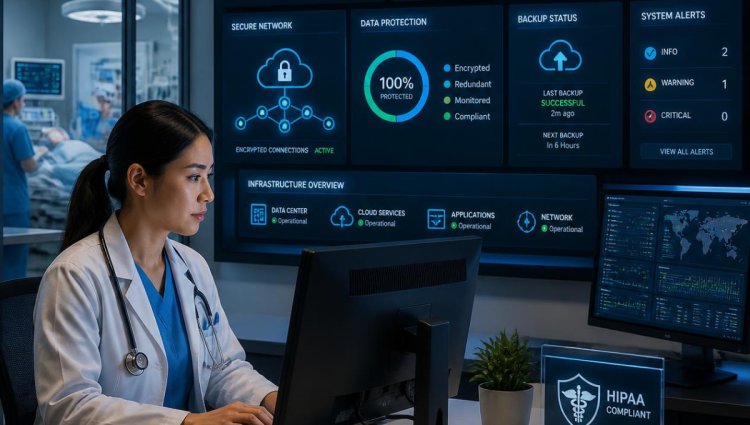
Healthcare organizations depend on technology for almost every aspect of daily operations. From electronic health records and appointment scheduling to diagnostic systems, communication platforms, billing applications, and telehealth services, reliable IT infrastructure is essential to delivering efficient patient care.
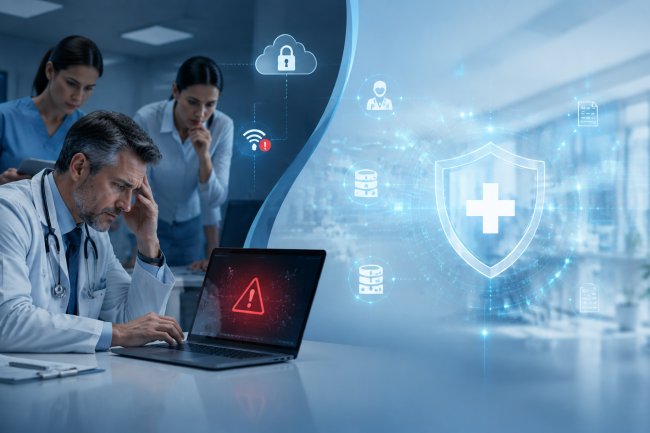
However, many healthcare organizations still approach IT problems reactively. A computer stops working, a network connection fails, an application becomes unavailable, or a security alert appears—and only then does someone contact the IT team.
This approach can be costly and disruptive.
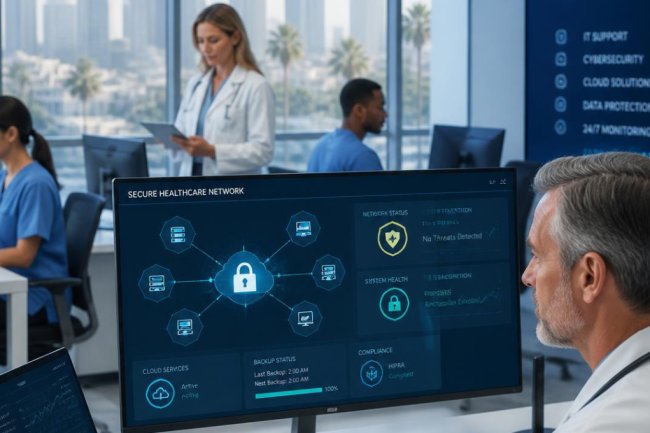
Proactive IT monitoring takes a different approach. Instead of waiting for technology problems to affect employees and patients, healthcare organizations can continuously monitor their systems to identify unusual activity, performance issues, security risks, and potential failures before they become serious problems.
For modern medical practices, clinics, and healthcare organizations, proactive monitoring is not simply a technical convenience. It can be an important part of maintaining operational continuity, protecting sensitive information, supporting HIPAA compliance, and creating a dependable technology environment.
What Is Proactive IT Monitoring?
Proactive IT monitoring involves continuously observing an organization's IT infrastructure to identify potential problems before they cause significant disruption.
Depending on the organization's environment, monitoring may include servers, workstations, networks, cloud applications, security systems, storage, backups, and other critical technology.
Monitoring tools can track indicators such as:
- Network performance
- Server health
- Storage capacity
- System availability
- Application performance
- Device status
- Backup activity
- Security events
- Unusual network behavior
- Software and hardware issues
The objective is straightforward: identify problems early and address them before they become major operational issues.
For healthcare organizations, this early-warning capability can be particularly valuable because even a relatively small technology failure can interrupt workflows and affect staff productivity.
1. Reducing Unexpected IT Downtime
Downtime can create serious challenges for healthcare organizations.
If employees cannot access an electronic health record system, network resources, medical applications, or communication tools, routine workflows can quickly slow down. Staff may have to rely on manual processes while IT teams work to restore services.
With IT infrastructure monitoring, potential issues can often be detected before systems completely fail.
For example, monitoring may identify unusual server activity, declining storage capacity, failing hardware, or network performance problems. Addressing these warning signs early can help reduce the likelihood of a larger outage.
This is one of the key advantages of medical IT support that emphasizes prevention rather than simply responding after something has already gone wrong.
2. Strengthening Healthcare Cybersecurity
Healthcare organizations are attractive targets for cybercriminals because they manage valuable and sensitive information.
Patient records, financial information, insurance details, and other confidential data require appropriate security controls. A cybersecurity strategy should therefore go beyond installing antivirus software or responding to incidents after they occur.
Proactive IT monitoring can provide an additional layer of visibility.
Continuous monitoring can help identify unusual login activity, unexpected network behavior, suspicious device activity, or other indicators that may require investigation.
When monitoring is combined with strong access controls, patch management, employee awareness, endpoint protection, secure backups, and other safeguards, healthcare organizations can establish a more comprehensive healthcare cybersecurity strategy.
Importantly, monitoring should complement—not replace—an organization's broader security and compliance program.
3. Supporting HIPAA Compliance Efforts
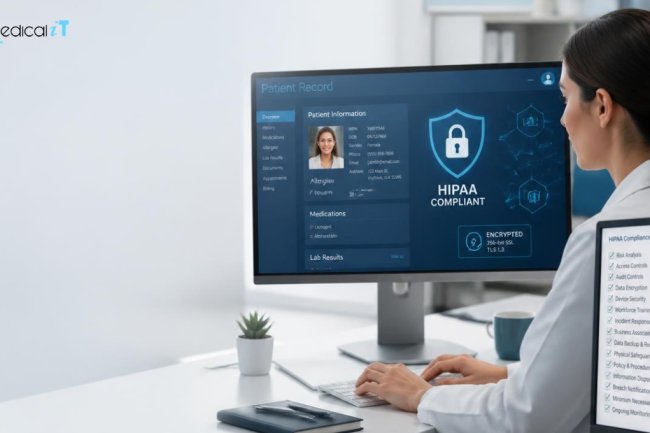
HIPAA compliance requires healthcare organizations to take appropriate measures to protect electronic protected health information and maintain appropriate safeguards.
Technology monitoring can contribute to this broader effort by helping organizations maintain visibility into their IT environment.
For example, organizations may benefit from monitoring systems for security events, maintaining appropriate logs, identifying vulnerabilities, and detecting unusual activity.
However, it is important to understand that monitoring alone does not make an organization HIPAA compliant. Compliance involves administrative, physical, and technical safeguards, along with appropriate policies, procedures, risk management, workforce training, and other controls.
A qualified healthcare IT support provider can help organizations understand where monitoring fits into their overall security and compliance strategy.
4. Identifying Problems Before They Affect Staff
One of the biggest advantages of proactive monitoring is that IT teams may be able to identify an issue before employees even notice it.
Consider a server that is gradually running out of storage space. Without monitoring, staff may eventually encounter application errors or performance problems.
With appropriate monitoring, the organization can receive an alert when storage reaches a predefined threshold. IT professionals can then investigate and resolve the issue before it affects normal operations.
The same principle can apply to network performance, hardware health, backups, applications, and other critical systems.
This preventive approach can make IT support more efficient and predictable.
5. Improving Employee Productivity
Healthcare professionals already have demanding responsibilities. Physicians, nurses, administrators, reception teams, billing personnel, and other employees need technology to work reliably so they can focus on their primary responsibilities.
Repeated IT interruptions can create frustration and waste valuable time.
Slow applications, unstable connections, malfunctioning devices, and inaccessible systems may seem like minor technical problems individually, but repeated disruptions can have a significant cumulative effect.
By using IT monitoring for healthcare, organizations can identify recurring performance problems and address their underlying causes.
The result can be a more stable technology environment that allows employees to spend less time troubleshooting technical issues and more time performing their actual responsibilities.
6. Protecting Backups and Recovery Capabilities
Backups are a critical component of business continuity and disaster recovery.
Simply having a backup system, however, does not necessarily mean that backups are working correctly.
A proactive monitoring strategy can help organizations verify whether backup processes are completing successfully and identify problems that could compromise recovery capabilities.
This can be particularly important in healthcare environments where data availability is essential.
Regular monitoring can help identify failed backup jobs, insufficient storage, connectivity problems, or other issues that may prevent reliable recovery.
Organizations should also periodically test their backup and recovery procedures rather than assuming that a successful backup notification automatically guarantees a successful restoration.
7. Extending the Life of IT Infrastructure
Technology eventually requires replacement, but proactive maintenance can help organizations manage their infrastructure more effectively.
Monitoring system performance and hardware health can provide useful information about which devices may require attention or replacement.
Instead of discovering a failing device after it stops working, IT teams may be able to identify warning signs and plan maintenance or replacement in advance.
This approach can help healthcare organizations make better technology investment decisions and reduce the risk of unexpected equipment failures.
It can also support more predictable IT budgeting.
8. Supporting Remote Work and Telehealth
Modern healthcare organizations increasingly rely on remote access, cloud platforms, virtual communication, and telehealth technologies.
These services make reliable connectivity and secure access even more important.
Healthcare IT services that include proactive monitoring can help organizations maintain visibility across distributed environments.
Monitoring can help identify connectivity problems, unusual activity, application performance issues, or other conditions that may affect remote users.
For organizations that depend on telehealth or remote administrative workflows, maintaining reliable technology can be an important part of delivering consistent services.
9. Making IT More Predictable
Reactive IT support often follows a simple pattern: something breaks, employees report the problem, IT investigates, and repairs begin.
Although reactive support will always have a place in IT operations, relying on it exclusively can make technology management unpredictable.
Proactive monitoring shifts the focus toward prevention.
Instead of asking, "What has gone wrong today?" organizations can begin asking, "What potential problems can we identify and resolve before they affect operations?"
This change in mindset can help healthcare organizations develop a more strategic approach to technology.
10. Why Healthcare Organizations Need Specialized IT Support
Healthcare technology has requirements that are different from those of many other industries.
A medical practice may rely on specialized applications, electronic health records, connected devices, secure communication platforms, cloud services, and systems containing sensitive patient information.
For that reason, organizations can benefit from working with an IT provider that understands the healthcare environment.
LA Medical IT focuses on IT support and HIPAA-related solutions for healthcare practices. The company states that it helps organizations assess security risks through comprehensive audits and develop policies and procedures supporting HIPAA/HITECH requirements.
A healthcare-focused provider can help organizations evaluate their technology environment, identify risks, implement appropriate monitoring, and establish processes for responding to problems.
How to Build a Proactive IT Monitoring Strategy
Healthcare organizations considering proactive monitoring should start with a clear assessment of their existing environment.
A practical strategy can include:
1. Identify critical systems.
Determine which servers, applications, networks, devices, and services are essential to daily operations.
2. Establish performance baselines.
Understand what normal system performance looks like so unusual activity can be identified.
3. Monitor security events.
Implement appropriate monitoring for suspicious activity and potential security incidents.
4. Monitor backups.
Verify that important backup processes are completing successfully.
5. Establish alert thresholds.
Configure meaningful alerts for conditions that require attention without overwhelming staff with unnecessary notifications.
6. Create response procedures.
Monitoring is most effective when alerts lead to clearly defined actions.
7. Review the environment regularly.
Technology, threats, applications, and organizational requirements change over time. Monitoring strategies should evolve accordingly.
Proactive IT Monitoring Is an Investment in Reliability
Healthcare organizations cannot eliminate every technology problem. Hardware can fail, software can malfunction, networks can experience disruptions, and cyber threats continue to evolve.
What organizations can do is improve their ability to identify and respond to potential problems.
That is the value of proactive IT monitoring.
By continuously observing critical systems, healthcare organizations can gain greater visibility into their technology environment, identify potential issues earlier, strengthen their security posture, support HIPAA compliance, reduce avoidable downtime, and provide employees with more reliable IT systems.
Most importantly, proactive technology management allows healthcare organizations to treat IT as a strategic part of their operations rather than simply a service they call when something breaks.
Partner With LA Medical IT
Reliable technology is essential for modern healthcare. If your organization is still relying primarily on reactive troubleshooting, it may be time to evaluate a more proactive approach.
LA Medical IT provides medical IT support, healthcare IT services, and solutions designed to help healthcare organizations improve the reliability and security of their technology environments.
To learn more or discuss your organization's IT needs, contact:
LA Medical IT
20501 Ventura Blvd., Suite 140
Woodland Hills, CA 91364
Phone: 888-635-9595
A proactive IT strategy can help your organization identify problems earlier, protect critical systems, and create a more dependable technology environment for your staff and patients.
What's Your Reaction?